Executive Summary
Access the complete, unabridged policy playbook and institutional research report in PDF format.
Ghana's "24-hour economy" has moved decisively from slogan to statute within the last year: the 24H+ programme was launched in 2025 as an integrated production-and-export transformation agenda, and on February 19, 2026, President John Dramani Mahama assented to the 24-Hour Economy Authority Bill (2025), creating a dedicated coordinating body to drive implementation.
Read correctly, the policy is not “late-night opening hours.” It is a multi-shift national productivity and export programme (24H+) designed to resolve structural bottlenecks—energy reliability, logistics, finance, skills, and state-delivery capacity—so that firms can run continuous production cycles where it adds value.
The near-term policy window is unusually concrete: the 2026 State of the Nation Address confirms (i) bill passage by parliament on February 6, 2026, (ii) a GHS 110 million 2026 budget allocation to begin implementation, and (iii) planned mobilisation of finance through partnership with Development Bank Ghana and the Ghana Infrastructure Investment Fund.
Policy Status and Current Landscape
The legal and political status of the policy is now unambiguous. A presidential press release dated February 19, 2026 confirms assent to the bill and states that it establishes a 24-Hour Economy Authority as the “central coordinating body” to align public and private-sector efforts and address infrastructure and regulatory needs.
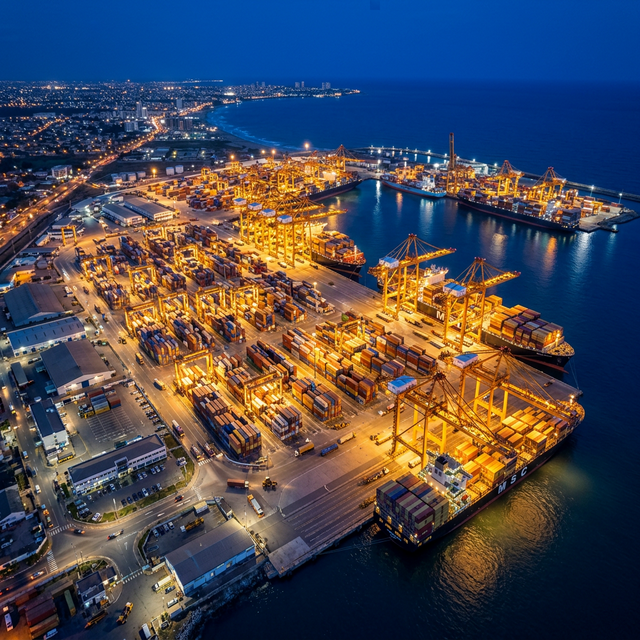
A key “readiness signal” is that parts of the state are already moving toward 24/7 trade facilitation. The SONA text reports a new 24-hour operation at Tema Port enabling importers to clear goods “at any time,” with customs, banking and other agencies working together to reduce congestion and transaction costs.
Systems-Level Diagnostic of Constraints
- Power reliability: Remains the first-order binding constraint. Solving the debt crisis and restoring commercial viability to the Electricity Company of Ghana (ECG) is critical for 24/7 supply.
- Trade logistics: High-leverage and politically feasible. Tema port handles ~72% of seaborne volume, making 24/7 clearance a fast-track to operationalizing the "24-hour state."
- Finance coordination: Anticipates large private capital mobilisation (FUND24). Fast, credible delivery of incentives is key.
- Labour regulation: Practical risks of informalization in shift work must be mitigated by clear compensation guidelines and stringent workplace safety enforcement (lighting, first aid).
- Security & mobility: Requires scaling night-time policing, transport, and street lighting to counteract non-linear risk increases after dark.
- Digital infrastructure: Re-engineering state workflows (permits, approvals) to be "always on" via platforms like Ghana.GOV.
Sector Readiness Matrix
The central implementation discipline is to define “24/7” narrowly and operationally by sector. Not every sector needs full 24/7 activity; many only need extended hours or back-end state services to unlock private production cycles.
| Sector | Practical Definition (What "24-hour" means) | Readiness (12-24 mos) | Primary Binding Constraints |
|---|---|---|---|
| Ports & Trade Logistics | 24/7 clearance chain: port + customs + banking + inspections + trucking | High (piloting) | Inter-agency staffing, digital workflow, security, predictable power |
| Agro-processing | Two/three-shift processing near production zones; cold chain storage | Medium | Reliable power, water, cold chain capex, structured financing |
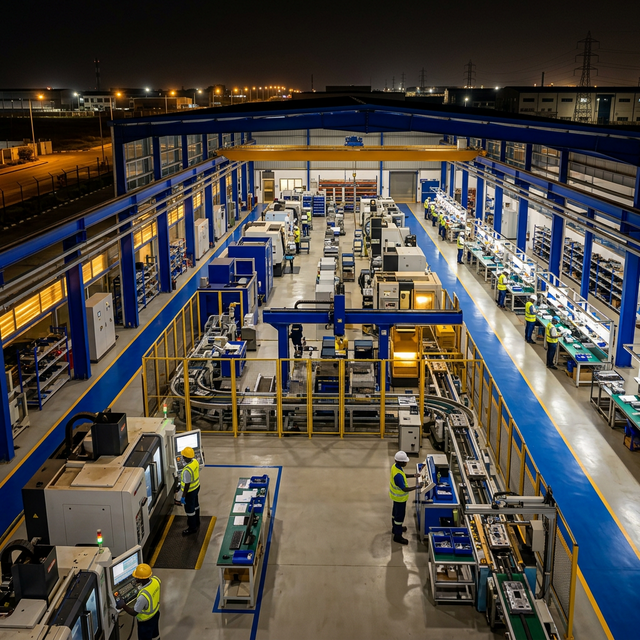
| Manufacturing | Multi-shift operations in designated parks; targeted incentives | Medium | Dedicated power, skills/shift management, labour compliance |
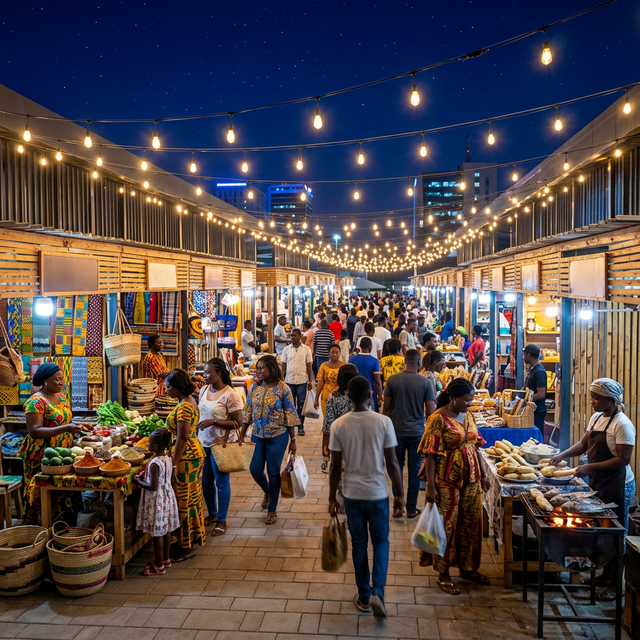
| Retail & Markets | Extended hours in designated “24H markets” | Medium | Municipal infrastructure (lighting), security, sanitation, transport |
| Digital Services & BPO | 24/7 exportable services (call centres, software support) | Medium–High | Data reliability, cyber risk, workforce skills, power backup |
Implementation Roadmap
A policy-useful approach is to run three tightly-scoped pilots that stress-test the “24-hour state” concept:
- Pilot One: 24/7 trade logistics corridor (Tema-centric). Formalize the current operation as a service standard with published "time-to-release" dashboards.
- Pilot Two: Agro-processing & cold chain nodes. Focus on throughput and utilization rather than new infrastructure, backed by strict procurement time guarantees.
- Pilot Three: "24-hour state service bundle". Identify 10–20 high-friction workflows (permits, registrations, payments) and guarantee 24/7 digital submission via the Ghana.GOV portal with defined response SLAs.
Monitoring and Evaluation (KPIs)
The decisive implementation discipline is to publish these metrics on a fixed cycle and tie continued incentives and financing support to performance:
- Trade logistics: Average clearance times and after-hours volumes.
- Energy reliability: Outage hours affecting certified 24H+ industrial sites.
- Labour compliance: Audit pass rates for certified firms and reported workplace incidents.
- Night-time safety: Night crash indicators and enforcement activity mapping.
- Jobs: Net job creation in participating firms, tracking the share of formal vs. vulnerable employment.